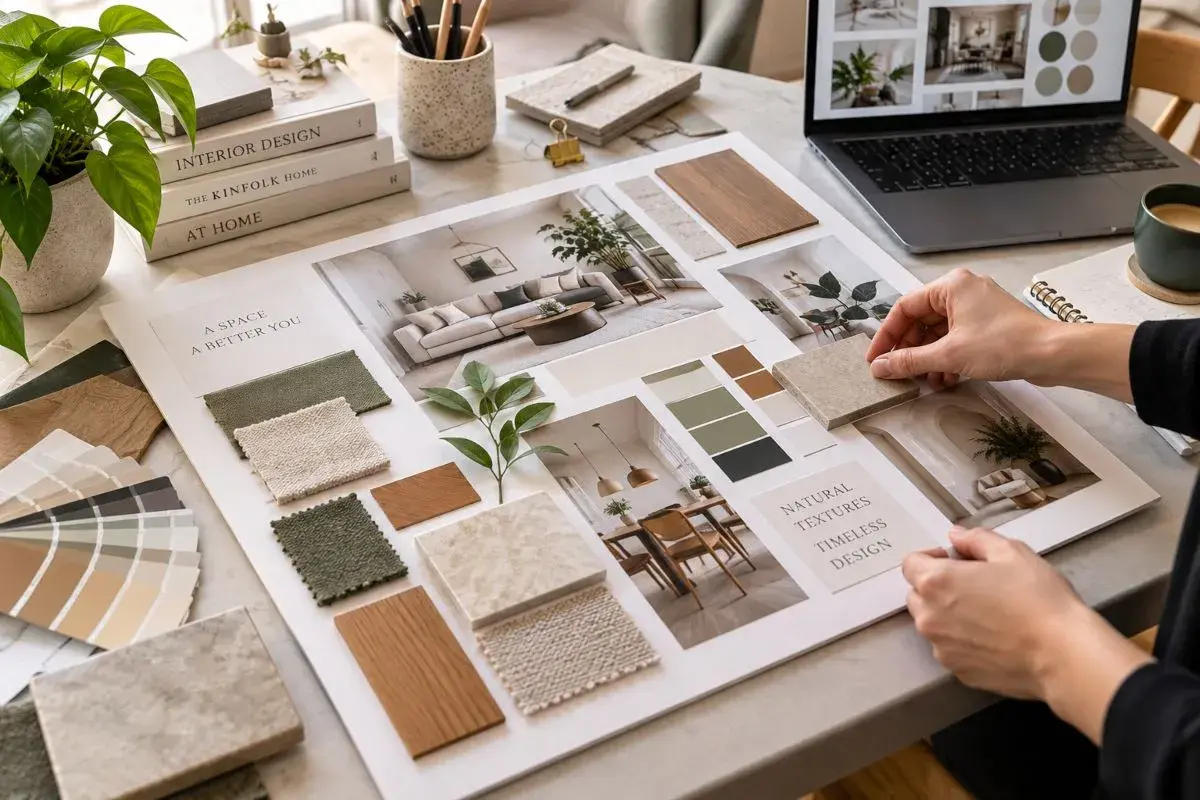







To make an interior design concept board, collect your visual inspiration and organise it digitally or physically to describe the room’s mood, colour palette, and key fittings. A concept board turns emotions into a clear vision before you start buying.
In artistic interior design, mood boards generally steal the show over concept boards. However, both tools are crucial allies in the design workflow. Each gives expert designers a canvas to communicate and refine their design concepts in similar yet distinct ways. While a mood board connects precise details and conceptualised products for a house or room, a concept board captures the essence or atmosphere envisioned for the space.
In this blog, you will explore what concept board interior design is and how it differs from mood boards in the bigger project process. You will also discover precise examples of interior design concept boards and exchange ideas for making your own.
What is a Concept Board in Interior Design?
A concept board is the first stage of any interior design project. It kicks off the creative process and is shaped by the customer’s preferences and personality. First, designers ask many questions to get to know you, your home, and what you like and dislike. This whole process involves the colours, materials, and finishes you want, along with your lifestyle and the people who live in the house. From this collected information, designers create a concept board that shapes the interior design strategy based on the brief.
Example: Nature-Inspired Living Room Concept Board
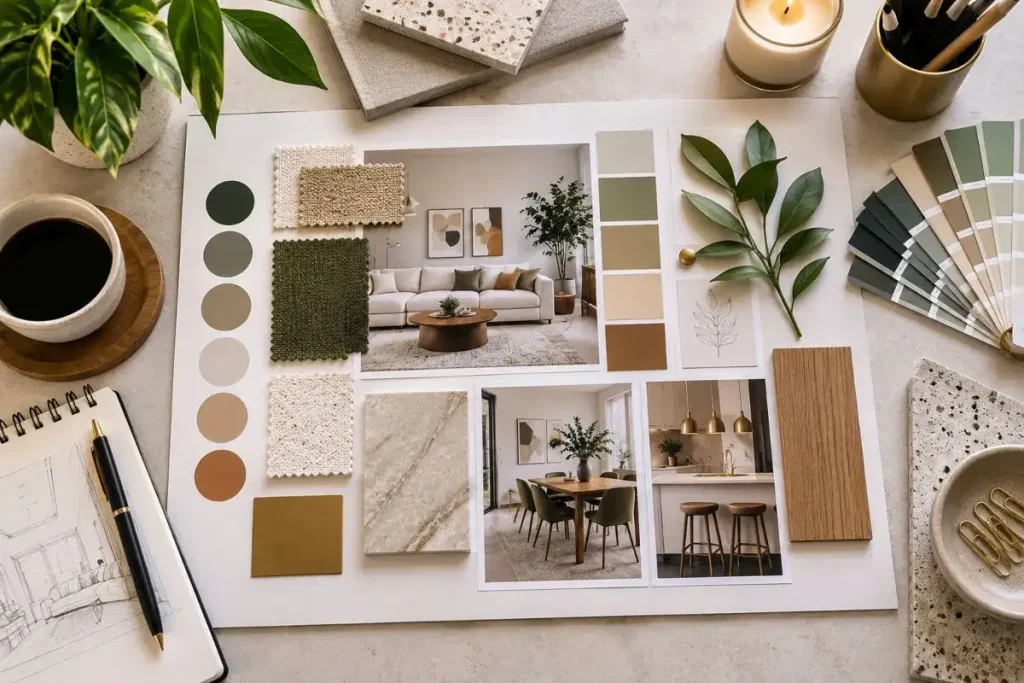
A nature-inspired concept board may feature anchor images of lush greenery, natural stone, gentle fabric weaves, warm wood, and basic tones like sage green, terracotta, and beige. Instead of displaying specific furniture or finishes, it evokes a spirit of peace, nature, and hospitality. This concept will guide the designer by providing an accurate mood board and specific choices for colours, materials and products.
What Does a Concept Board Include?
An interior design concept board assembles the main visual and design components that shape a space’s complete look, feel, and direction. It generally includes:
Design Theme or Style
A design theme or style that appeals to you, such as modern, minimalist, Scandinavian, rustic, or tropical.
Inspiration Images
Images of various interior designs, architecture, furniture or places that influence the desired environment.
Colour Palette
The key, secondary, and accent colours applied throughout the place.
Materials and Textures
Examples of stone, wood, marble, fabric, metal, tiles, or other finishes.
Lighting Ideas
Examples include wall lights, pendant lights, floor lamps, or other fixtures that are appropriate to the idea.
Furniture Ideas
Photos or sources illustrating the type, shape and style of furniture designated for the room.
Key Design Elements
Detailed descriptions of the concept, such as natural elements, indoor plants, statement walls, or architectural features.
Patterns and Decorative Details
Examples include rugs, artwork, fabrics, accessories, wallpapers and designs that boost the project.
Layout or Floor Plan References
Thumbnail sketches or layouts showing how the key elements might work together.
Typography or Keywords
A few expressive words like elegant, warm, natural, relaxing, or modern to strengthen the design direction.
Why is a Concept Board Important?
Beginning with a concept board is always important. Because it helps you identify the colour scheme, materials and overall mood of the plan before it starts. After that, you can approve or reject key elements so the designers can adjust the design to match your requirements. A strong, structured concept is a simple way to convey the designer’s vision and ideas for the plan, especially when you want to see things visually.
Another big benefit of a concept board is that it lets everyone revisit it to track progress and ensure nothing gets lost or overlooked. This is particularly convenient in bigger projects.
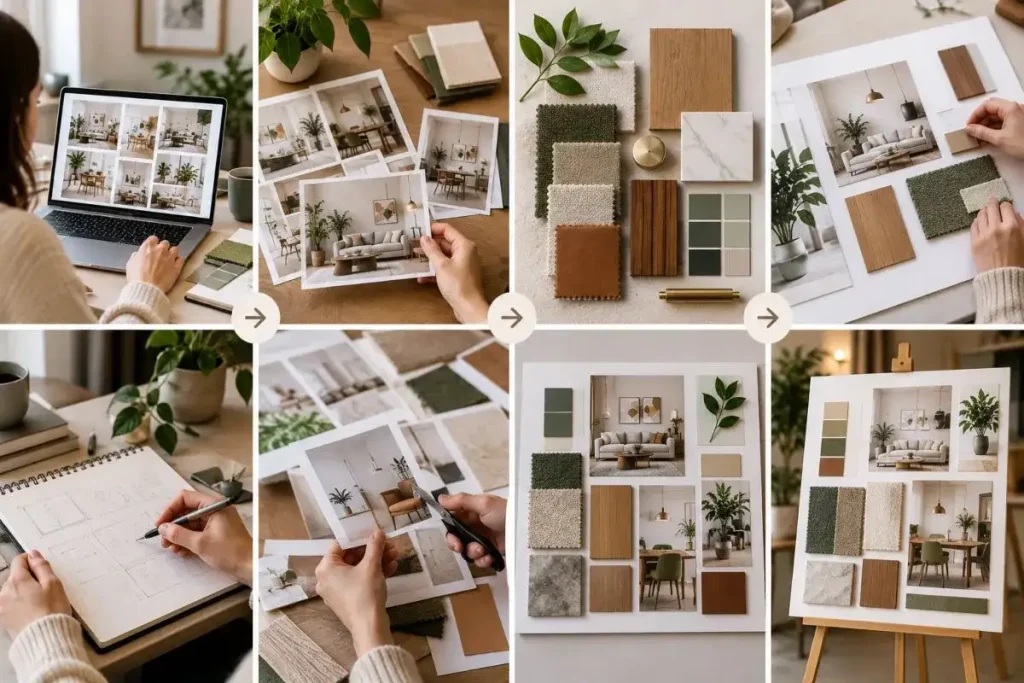
Steps to Create Your Concept Board
Define the Design Idea
Begin by defining the key concept or theme for the place. Consider the environment, style and overall effect you want to generate. For instance, the idea might be advanced minimalism, coastal living, rustic charm, or warm natural interiors.
Consider the Space and its Purpose
Consider where the design will be used and what the space needs to do. A bedroom, home office and more may need different design approaches. Evaluate variables like the room’s purpose, size, natural light and current structures.
Gather Inspiration
Gather photos that signify your selected idea, and make an inspo board to curate your aesthetic. Browse design websites, Pinterest, magazines, photography and other visual sources for architecture, furniture, rooms, colours and details that align with your concept.
Choose a Colour Palette
Choose a small collection of colours that will develop the space’s aesthetics. This includes a key colour, neutral background shades and one or two accent colours that preserve the palette and create a more integrated concept board.
Select Materials and Textures
Incorporate material and texture samples or photos to support the idea. The plan may include both hard and soft materials. Mixing various textures can help create the character you need for the space.
Add Furniture and Design Elements
This involves photos showing the type and elegance of furniture, flooring, lighting, fixtures, and accessories that match the idea. At this stage, you might not need to select additional products. Focus on an interactive, planned design direction.
Arrange the Elements
Carry your chosen photos, textures, colours and materials composed on one board. Organise associated components and prevent overfilling the layout. The board must have a compositional flow so anyone can understand the idea at a glance.
Add Keywords or Short Descriptions
Add a few words that capture your idea, like organic, calm, or cultured. Short descriptions can also explain why you incorporated specific materials, colours, or project essentials.
Review and Refine
Analyse the finished board and check whether each component supports the main idea. Eliminate anything irrelevant or extraneous, and replace it with something that reinforces the overall project direction.
Use the Board as a Design Guide
When completed, the concept board serves as a visual representation at every stage of design. It can help with decisions about materials, furniture, colours, lighting and decorative details, while keeping the space relevant to the creative design.
Why Create a Concept Board for an Interior Design Project?
Visualises the Design Concept
A concept board visually represents your design idea and conveys the core meaning, mood, and overall visual appeal you aim to attain in your space. It combines a visual collage of images, colours, materials, textures, and designs that match your idea. A concept board gives you a visual compass to describe your concept to designers, contractors, or vendors and keep everyone aligned.
Collaboration and Communication
Concept boards convey ideas clearly and support collaboration with design experts. By presenting your concept board, you can communicate your needs and favourites, which help designers and contractors understand your vision. This common baseline benefits everyone involved, helping you work together smoothly and avoid mistakes or changes from the original idea.
Sets the Tone and Mood
A masterfully executed concept board helps set the tone and mood of your space. It lets you discover themes, styles and colour palettes, helping you picture how diverse components combine pleasantly. Whether you want a cosy, country-style feel or a smooth, modern atmosphere, the concept board unifies features that describe your design choices, creating overall design coherence.
Streamlines Decision-Making
The concept board serves as a decision-making tool that streamlines the selection process for furnishings, materials, and decor. With a transparent idea visible to you, it becomes easy to analyse choices and make selections that align with your project concept. The concept board keeps you focused and helps you avoid being overwhelmed by too many choices, ensuring every decision supports the overall idea of your space.
Evolution and Adaptation
Concept boards are not carved in stone. They serve as a roadmap that can grow and change as the project progresses. When you discover fabrics, materials, and furnishings, your idea might shift and mature. The concept board serves as a reference point that lets you evaluate new concepts and additions against the original idea and ensure any variations match the main concept.
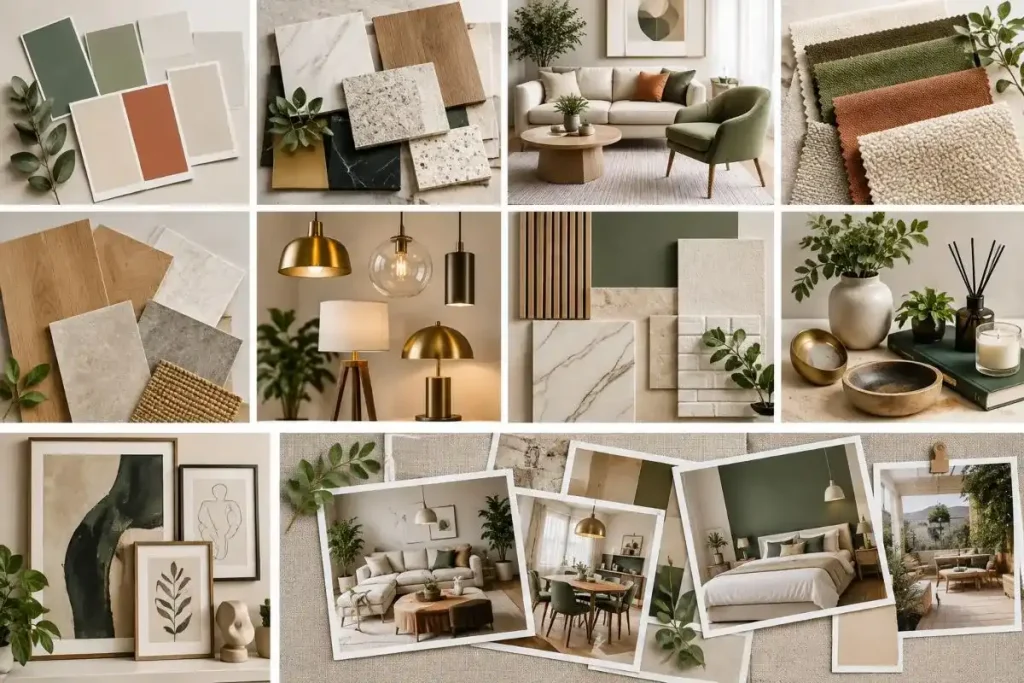
What to Put on An Interior Design Concept Board
Component | What it communicates |
Colour swatches | Overall colour scheme |
Material samples | Finishes and quality |
Furniture images | Style and form |
Fabric samples | Texture and softness |
Flooring | Foundation of the scheme |
Lighting references | Environment |
Wall finishes | Background character |
Accessories | Decorative direction |
Artwork | Personality |
Inspiration images | Overall mood |
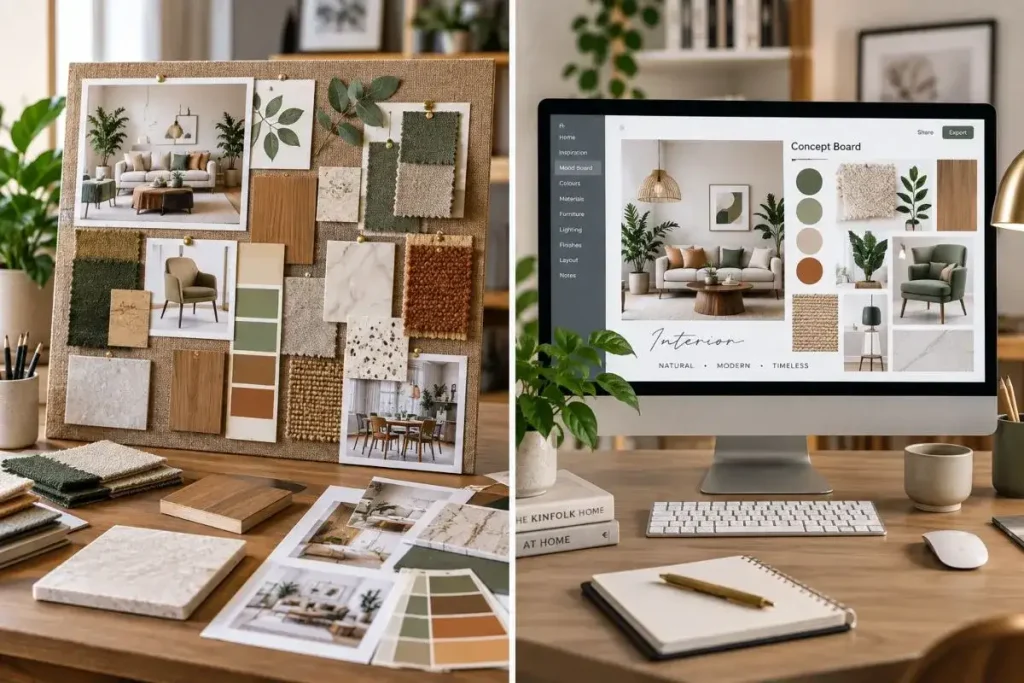
Difference Between Physical and Digital Interior Design Concept Boards
Physical interior design concept boards use actual material samples on a physical board. Whereas digital concept boards use computer software to display photos on a screen.
Physical Concept Boards
- Material: They involve actual paint chips, wood pieces, fabric and metal samples.
- Creation: Creators cut paper, collage samples, and sketch or write transcripts by hand.
- Touch: Customers can trace contours and feel the real weight and surface of materials.
- Presentation: They work well for direct meetings where people share the same space.
- Changes: Correcting a mistake or exchanging things means starting again or attaching a new section in place of the old one.
Digital Concept Boards
- Materials: They use digital images, 3D models and physical textures organised on the screen.
- Creation: Creators use diverse software such as Canva, Photoshop and specialised interior design apps.
- Touch: Customers view the design on a computer or mobile phone but cannot sense the real materials.
- Presentation: Digital concept boards are perfect for online meetings, emails and quick online distribution.
- Changes: Creators can make changes easily, such as altering colours, moving things or changing layouts with just a few clicks.
Best Tools for Creating an Interior Design Concept Board
Rayon Design
A web-based CAD tool for inserting web screenshots, using AI background removal and supporting real-time collaboration.
Morpholio Board
Morpholio Board is perfect for interior creators who need accurate dimensions, a product portfolio, AR viewing, and supplier order forms.
Canva
The quickest tool for beginners and experts who need clear image collage layouts and refined client slide decks.
The free preliminary stage for collecting, holding, and organising visual references.
Milanote
Milanote is a digital canvas with a clean surface for pinning photos, colour samples, and sticky notes.
Tips for Making an Expert-Looking Interior Design Concept Board
Start with a Clear Concept
Describe the complete project style, mood, and motivation before choosing pictures, materials, and colours.
Select a Cohesive Colour Palette
Restrict your board to a limited, balanced colour palette to create a cohesive, reliable look.
Use a Mix of Visual References
To connect the idea visually, associate interior pictures with lighting, furniture, materials, textures, and architectural specifics.
Create a Balanced Layout
Organise components considerately around a clear reference point, and leave margin space so the board does not look cluttered.
Keep it Practical and Relevant
Ensure the chosen concepts suit the room size, lighting, function, materials and operational requirements.
What is a Mood Board?
A mood board in interior design is a collection of images that evoke an emotional state or distinct emotions for an artistic plan. You can create this board using anything, including images, drawings and textiles, to convey the desired feel.
Mood boards are frequently used in art or design projects because they can provide direction and motivation. These boards help sharpen the project’s focus and act as crucial reference points during the artistic process.
Example of Mood Board
A mood board for a warm, comfort-zone space may include photos of linen beige interiors, natural wood furniture, textured fabrics, warm lighting, indoor plants and neutral colour tones. When combined, these visual components make a transparent, touch room-needed environment that feels comfortable, peaceful and appealing without defining the exact product or finished layout.
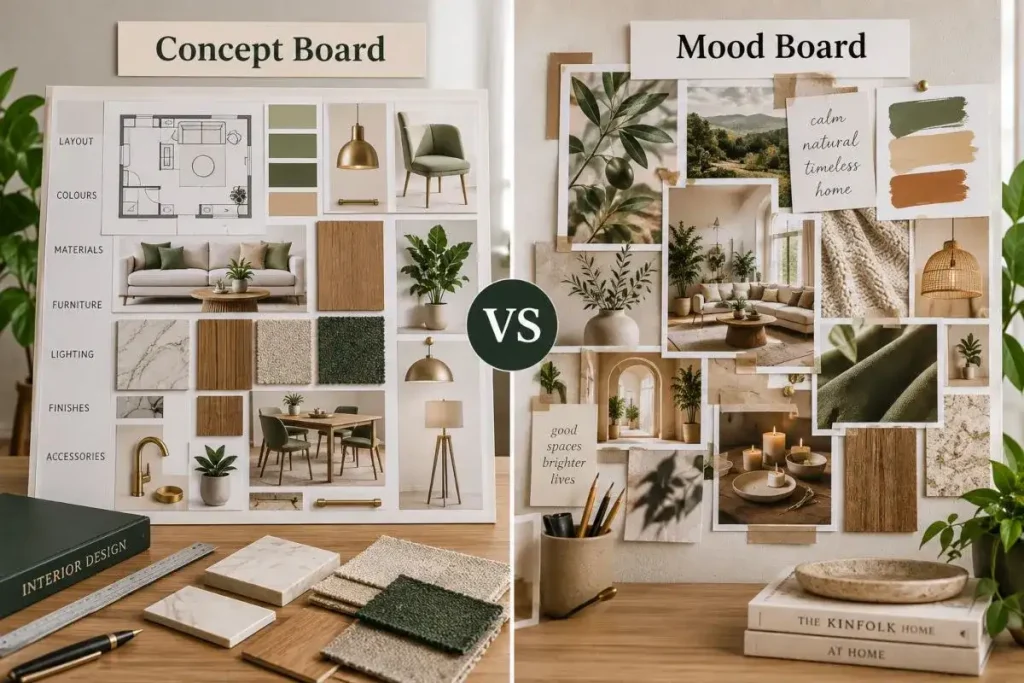
Concept Boards vs. Mood Boards: What Interior Designers Should Know
In interior design, two broader types reflect different approaches in the project planning process. These types are explained below:
A Concept Board Conveys a More Abstract Vision
A creator looking for a rural farmhouse theme for a customer may display an image of a pristine barn in a huge field, with details of worn barnwood texture. They may include an image of a basket of fresh farm eggs, paired with a contrasting colour palette that matches the eggshell tone or the sensory feel of a woven basket.
Another designer-preferred advanced coastal theme may involve an image of crashing waves, a picture of someone stepping into the sea, and splashes of paint colours to replicate the qualities of a cloudy, sea-salted sky.
In both examples, these concept boards do not demand a literal reading, such as the homeowner living at the pictured beach or a farmhouse-style home needing a chicken coop.
Mood Boards Provide a More Literal, Grounded Picture of the Design Concept
Alternatively, mood boards bring a dreamy plan into the reality of the customer’s specific house and how it will be selected with accents, furnishings, and fixtures. These mood boards turn the concept board’s atmosphere into a practical roadmap for a cohesive design scheme.
Mood board ideas:
- Tropical retreat mood board: lush greenery, natural wood, rattan furniture, earthy colours and woven textures.
- Scandinavian mood board: White and beige tones, light wood, cosy fabrics, indoor plants, and natural light.
- Coastal mood board: White, soft blues, linen, light wood, and maritime images.
- Modern minimalist: clean lines, neutral tones, soft fixtures, simple furniture, and organised spaces.
Conclusion
Creating an interior design concept board is the best way to convert concepts into an aesthetic roadmap before making crucial design choices. By combining inspirational images, materials, colours, textures, furniture references and keywords, a concept board conveys the mood and completes a design concept. It also boosts efficiency, supports decision-making, and maintains continuity at every stage of the project.
Whether you select a physical or digital board, this visual tool provides a framework that keeps each design component aligned with your original idea. With proper motivation and careful planning, a concept board can turn abstract concepts into a consistent, beautiful interior design plan.
